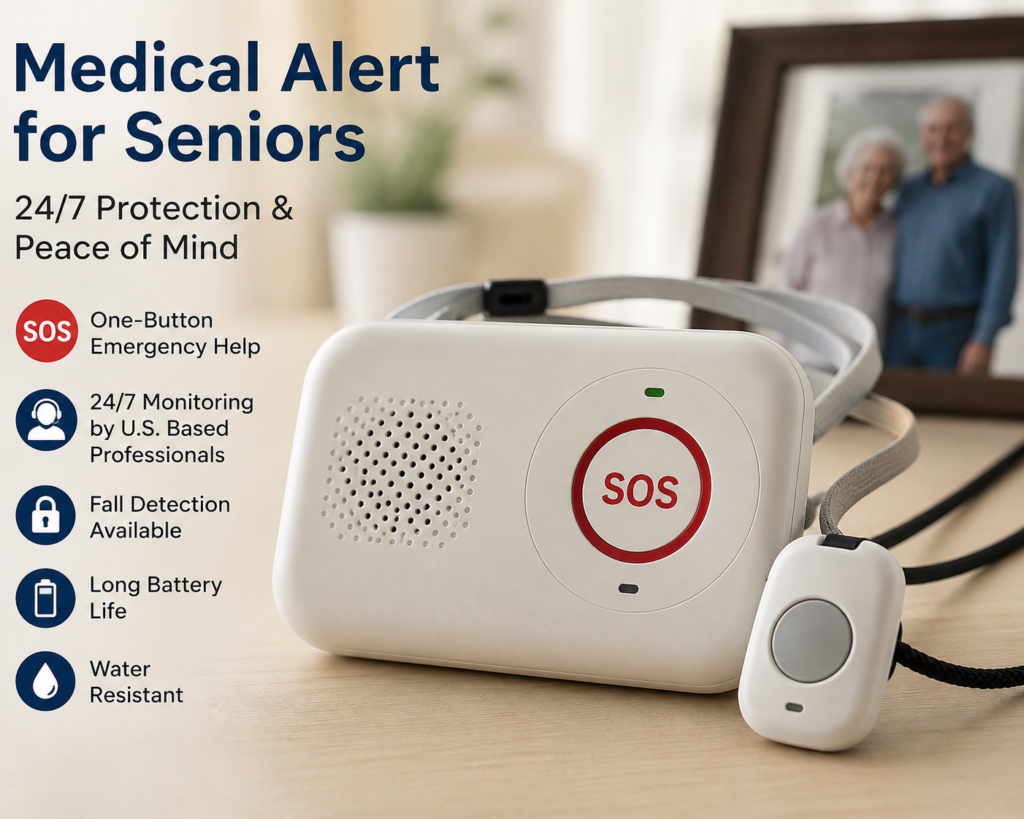
Growing older doesn’t mean giving up independence. With today’s medical alerts for seniors, older adults can continue living safely at home while knowing that help is available at the press of a button.
Whether you live alone or simply want extra protection, a medical alert system can provide fast access to emergency assistance 24 hours a day along with peace of mind and comfort at home or out.
BEST OVERALL PICK: View on Amazon
My top pick for its reliable emergency response and easy-to-use design.
Medical Disclaimer: The content in this website is for informational purposes only and not intended to replace professional medical advice. Always consult a qualified healthcare provider before making any decisions on mobility and safety, or seniors care needs.
What Is a Medical Alert System?
A medical alert system is a wearable emergency device that allows seniors to quickly contact trained emergency operators if they experience:
- Slips and falls
- Medical emergencies
- Chest pain
- Difficulty breathing
- Dizziness
- Other urgent situations
Most systems include a wearable pendant, bracelet, or smartwatch with an emergency button.
Benefits of Medical Alert Systems
1. Immediate Emergency Assistance
With one press of a button, help is available within seconds.
2. Greater Independence
Many seniors can safely remain in their own homes instead of moving into assisted living.
3. Peace of Mind for Families
Family members know their loved one can quickly reach help even when they are not nearby.
4. Fall Detection
Many modern systems automatically detect serious falls—even if the user cannot press the emergency button. View on Amazon
5. GPS Location Tracking
Mobile medical alerts include GPS, making it easier for emergency responders to locate the user. View on Amazon
Types of Medical Alert Systems
In-Home Systems
Best for seniors who spend most of their time at home.
Features include: View on Amazon
- Base station
- Large emergency button
- Excellent indoor coverage
Mobile Medical Alerts
Ideal for active seniors.
Features include: View on Amazon
- GPS tracking
- Cellular connection
- Nationwide coverage
- Rechargeable battery
Medical Alert Smartwatches
These devices combine:
- Emergency calling
- Heart rate monitoring
- Step tracking
- GPS
- Stylish appearance View on Amazon

Features to Look For
When shopping for a medical alert system, consider:
- 24/7 monitoring
- Fall detection
- Waterproof design
- Long battery life
- GPS tracking
- Two-way communication
- Easy-to-use buttons
- Lightweight wearable
Who Should Consider a Medical Alert?
Medical alerts are especially helpful for seniors who:
- Live alone
- Have balance problems
- Have experienced previous falls
- Take multiple medications
- Have heart conditions
- Recover from surgery
- Want additional peace of mind View on Amazon
How Much Do Medical Alert Systems Cost?
Monthly monitoring plans typically range from $20 to $50, depending on features such as:
- Fall detection
- GPS monitoring
- Mobile coverage
- Caregiver apps
- Premium support
Some providers also charge equipment or activation fees.
Tips for Choosing the Best Medical Alert
Before purchasing, ask:
- Is fall detection available?
- Is there a long-term contract?
- Is customer service available 24/7?
- Is the device waterproof?
- How long does the battery last?
- Does it work outside the home?
Frequently Asked Questions
Do medical alert systems call 911?
Many systems first connect you to a trained monitoring center, which contacts emergency services if needed.
BEST BUDGET PICK: View on Amazon
Best for seniors who want affordable medical alert protection with the added convenience of a care giver app. The app allows family members to receive alerts and check the user’s location.
Can I wear my medical alert in the shower?
Many medical alert pendants and bracelets are waterproof, making them safe to wear while bathing.
Is fall detection always accurate?
No system detects every fall, but fall detection technology continues to improve and provides valuable extra protection.
Final Thoughts
Medical alert systems give seniors greater confidence to remain independent while providing reassurance to family members. Whether you choose an in-home system, a mobile device, or a medical alert smartwatch, investing in safety can make a significant difference in an emergency.
If you’re considering a medical alert system, compare features carefully and choose one that fits your lifestyle, budget, and health needs.


Affiliate Disclosure: As an Amazon Associate, I earn a small commission from qualifying purchases at no extra cost to you.